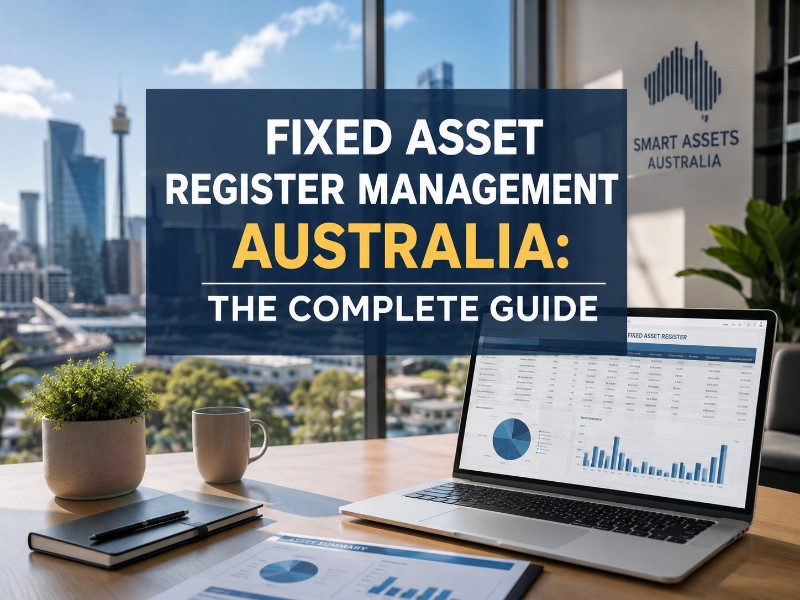
Fixed Asset Register Management Australia
Most Australian businesses know they should track their assets. Far fewer actually do it well. A fixed asset register left to gather dust — or worse, a spreadsheet no one has touched since the last accountant left — creates more problems than it solves: incorrect depreciation claims, audit headaches, insurance shortfalls, and a financial picture that simply doesn’t reflect reality.
Fixed asset register management in Australia means maintaining a structured, up-to-date record of every long-term physical asset your business owns, including its cost, location, condition, and depreciation status. Done properly, it keeps you compliant with ATO requirements, accurate in your financial statements, and in control of one of your largest categories of spending.
Key Takeaways
- A fixed asset register records every long-term asset your business owns — from machinery to laptops — along with acquisition cost, depreciation, location, and disposal history.
- Australian businesses must comply with ATO depreciation rules and, where applicable, AASB 116 Property, Plant and Equipment.
- Registers are not just for compliance — they directly improve audit readiness, insurance accuracy, and capital budgeting decisions.
- Small businesses benefit from maintaining one too, especially for tax deductions and simplified end-of-financial-year reporting.
- Cloud-based software like Xero or MYOB can automate depreciation calculations and reduce manual error significantly.
What Is Fixed Asset Register Management?
A fixed asset register is a detailed record of every non-current physical asset a business owns — things that support operations over multiple years rather than being consumed or sold quickly. Think machinery, vehicles, computers, office furniture, and leasehold improvements.
Managing that register means keeping it current: recording acquisitions, tracking depreciation, noting maintenance history, updating locations, and recording disposals when assets leave the business. It’s an ongoing process, not a once-a-year task.
The distinction from inventory management matters. Inventory is stock held for sale — it moves through the business in months, sometimes weeks. Fixed assets stay put. A delivery van used for five years is a fixed asset. The products it delivers are inventory. Confusing the two creates accounting errors that compound over time.
What Information Should Be Recorded?
Each asset entry in the register should capture, at minimum:
- Asset ID — a unique identifier, often linked to a barcode or QR code
- Asset description — clear enough that someone unfamiliar with the business can identify it
- Purchase date and acquisition cost — the price paid, including installation or freight if applicable
- Supplier details — useful for warranty claims and repeat procurement
- Location and custodian — who is responsible, and where the asset physically sits
- Useful life and salvage value — needed to calculate depreciation correctly
- Depreciation method and accumulated depreciation — prime cost or diminishing value, per ATO guidelines
- Maintenance history — dates, costs, and nature of any repairs
- Disposal date and proceeds — when the asset leaves the business
Industries vary in what else they track. A construction firm managing heavy equipment will add service intervals and compliance certifications. A healthcare provider tracks medical device registration numbers. The core fields, though, apply everywhere.
Why Australian Businesses Need a Fixed Asset Register
Here’s the part that surprises most small business owners: a fixed asset register isn’t just a compliance tool. It’s a financial control mechanism that pays for itself.
Audit readiness is the obvious one. Whether it’s an internal review or an ATO audit, a well-maintained register gives auditors exactly what they need without weeks of scrambling. Missing or incorrect asset records are one of the most common triggers for extended audit processes.
Insurance accuracy is less obvious but arguably more valuable. Underinsurance is widespread among Australian SMEs — and when a claim is needed, businesses without proper asset records struggle to substantiate the value of what was lost or damaged. A register with acquisition costs, current valuations, and depreciation data makes claims far easier to process and far harder for insurers to dispute.
Capital budgeting also improves significantly. Knowing the age, condition, and remaining useful life of assets lets you plan replacement cycles proactively, rather than reactively replacing equipment after it fails at the worst possible time.
Risk reduction is the last piece. Assets that fall off the radar — equipment that’s moved between sites, vehicles no longer in service, IT hardware assigned to former staff — represent both financial exposure and security risk. A register makes those gaps visible.
Australian Compliance Requirements and Accounting Standards
The ATO has clear expectations around asset records. Businesses claiming depreciation deductions need to demonstrate the asset’s cost, the date it was acquired, and how depreciation has been calculated. Without a register, substantiating those claims under audit becomes an exercise in reconstructing records from invoices and bank statements — time-consuming and error-prone.
ATO Depreciation Rules
Australian businesses can generally choose between two methods:
- Prime cost (straight-line): Deducts the same amount each year over the asset’s effective life.
- Diminishing value: Applies a higher deduction in earlier years, declining over time.
The ATO publishes effective life determinations for hundreds of asset types — from office chairs (10 years) to heavy earthmoving equipment (varies by type). Using the wrong effective life, even accidentally, results in incorrect deductions that may need to be reversed. A register forces you to document the method and life used, which protects you if the figures are ever questioned.
AASB 116 for Larger Businesses
Companies preparing general-purpose financial statements must also comply with AASB 116 Property, Plant and Equipment, which sets out rules for recognition, measurement, depreciation, and disclosure of fixed assets. This standard requires that assets be carried at cost less accumulated depreciation, or at a revalued amount — with any revaluation surplus disclosed separately.
For most small businesses, AASB 116 won’t apply directly. But once a business is seeking external finance, preparing for sale, or required to produce audited statements, the standard becomes relevant quickly. Building good habits in the register from the start avoids a painful reconstruction exercise later.
Record Retention
The ATO requires business records to be kept for five years from the date the records were prepared or the transactions were completed. For assets with long useful lives, this means records from acquisition through to disposal and beyond — another reason a structured register beats a folder of loose invoices.
What Should a Fixed Asset Register Include?
| Field | Purpose |
|---|---|
| Asset number | Unique identifier for tracking and audit |
| Description | Clear identification of the asset |
| Purchase date | Establishes depreciation start point |
| Acquisition cost | Basis for depreciation and insurance |
| Supplier | Warranty and procurement reference |
| Location | Accountability and physical verification |
| Custodian | Who is responsible for the asset |
| Useful life | Determines depreciation schedule |
| Salvage value | Affects net depreciable amount |
| Depreciation method | Prime cost or diminishing value |
| Accumulated depreciation | Current book value calculation |
| Maintenance history | Condition tracking and cost records |
| Disposal date and proceeds | Required for capital gains or loss calculations |
One field that businesses routinely undervalue: disposal records. When you sell, scrap, or write off an asset, the difference between its book value and the proceeds is either a gain or a loss — and both have tax implications. Without disposal records, these adjustments get missed or estimated, which creates discrepancies in your financial reporting.
Best Practices for Managing a Fixed Asset Register
The most common failure mode isn’t a bad register — it’s a register that starts well and then stops being updated. Here’s what keeps one accurate over time.
Run a physical audit at least annually. Compare what’s in the register to what’s actually on-site. It sounds basic, but businesses regularly discover assets listed as current that have long since been disposed of, or locate equipment that was never recorded in the first place. For businesses spread across multiple sites, this is even more important — assets migrate between locations without anyone updating the system.
Set a clear process for new acquisitions. Every purchase order for an asset above your capitalisation threshold should automatically trigger a register entry. Define that threshold (commonly $1,000 for smaller businesses, higher for larger ones) and make registration part of the procurement process, not an afterthought.
Standardise naming conventions. “HP Laptop” and “Laptop HP EliteBook 840 G10” are the same asset described two different ways — and that inconsistency makes searching, filtering, and auditing harder than it needs to be. Agree on a format and apply it consistently.
Automate depreciation where possible. Manual depreciation calculations on large registers are where errors concentrate. Software that calculates and posts depreciation automatically — and flags when an asset reaches the end of its useful life — removes a significant source of risk.
Fixed Asset Register Software for Australian Businesses
The right software depends on business size and complexity. Most Australian businesses already using cloud accounting software can manage their fixed asset register within the same platform.
Xero includes a fixed asset module that handles depreciation schedules, disposal recording, and register reporting. It integrates directly with the chart of accounts, which means depreciation entries post automatically without manual journals.
MYOB offers similar functionality, with asset tracking built into AccountRight. Larger businesses sometimes add dedicated asset management modules from vendors like AssetAccountant, which connects to both Xero and MYOB and provides more granular tracking.
Microsoft Dynamics 365 and SAP sit at the enterprise end — relevant for businesses with hundreds or thousands of assets across multiple sites, where features like barcode scanning, mobile asset verification, and ERP integration become necessary rather than optional.
For businesses not yet using any asset tracking tool, even a well-structured spreadsheet — updated consistently — beats nothing. The trap is assuming the spreadsheet will scale. It won’t, past a certain number of assets or users. Building in the move to software early costs less than retrofitting years of spreadsheet data later.
Common Challenges and How to Avoid Them
Duplicate records happen when the same asset is entered twice — often after a system migration or when multiple people have register access without a clear process. Regular reconciliation catches these, but a unique asset ID system prevents them.
Incorrect depreciation is usually a useful-life problem. An asset assigned a 5-year life that the ATO considers a 3-year life results in deductions that don’t match what’s permissible. Cross-checking asset classifications against ATO effective life tables at acquisition prevents this from compounding year after year.
Outdated registers are the most widespread issue. Assets disposed of years ago still appearing on the register inflate the asset base and affect bank reconciliation and reporting accuracy. A disposal process that’s as formal as the acquisition process — requiring sign-off, register update, and documentation of proceeds — closes this gap.
Poor documentation at disposal is the underrated one. When an asset is sold or scrapped, many businesses simply remove it from the register without recording the disposal price. That’s the number needed to calculate the capital gain or loss. Missing it means missing a tax adjustment — in either direction.
Fixed Asset Register Management Across Australian Industries
Different industries manage assets differently, but the same discipline applies across all of them.
Construction and mining — companies like Rio Tinto Australia manage enormous fleets of heavy equipment with scheduled maintenance windows, compliance certification requirements, and assets that regularly move between project sites. Asset registers in these sectors typically integrate with fleet management systems and track service intervals as closely as financial values.
Healthcare — providers track medical equipment against device registration numbers, calibration schedules, and infection control requirements, alongside the standard financial data. CSL, for example, operates capital-intensive manufacturing facilities where asset lifecycle tracking directly affects production planning.
Education and local government — Australian universities and councils manage infrastructure assets — buildings, roads, IT systems — with long useful lives and complex depreciation profiles. AASB 116 compliance is standard in these sectors, along with regular revaluation requirements for buildings and land.
Retail — businesses like Woolworths Group track store fit-outs, refrigeration equipment, and IT assets across hundreds of sites. The challenge here is scale: consistency in data entry and depreciation calculations across a distributed organisation requires centralised software and clear process ownership.
Small business and sole traders — the register is simpler, but the discipline matters just as much. A tradie with a ute, tools, and a laptop has three fixed assets that attract depreciation claims. Recording them properly is the difference between maximising legitimate deductions and leaving money on the table. Bookkeeping essentials for sole traders cover the practical starting points for businesses at this scale.
Frequently Asked Questions About Fixed Asset Register Management Australia
Is a fixed asset register required in Australia?
There’s no single law that mandates a fixed asset register by name. However, if your business claims depreciation deductions — which most do — the ATO expects you to substantiate those claims with records. Businesses preparing general-purpose financial statements must comply with AASB 116, which effectively requires maintaining asset records. The practical answer: yes, you need one, even if the legal language doesn’t use those exact words.
What assets should be included?
Include any asset used in the business over multiple years above your capitalisation threshold: property, plant and equipment, vehicles, office furniture, computers, machinery, and leasehold improvements. Exclude inventory (held for resale), items expensed immediately under the instant asset write-off rules, and intangible assets like trademarks or software licences (which have their own treatment).
How often should businesses update their register?
Update it every time an asset is acquired, disposed of, transferred between locations, or significantly modified. Beyond event-driven updates, run a full reconciliation — comparing the register to physical assets — at least once a year, ideally aligned with your end of financial year bookkeeping checklist.
Can small businesses benefit from a fixed asset register?
Yes — and the benefit is often larger in proportion to the business size than it is for large enterprises. For a small business, a vehicle, a set of tools, and a computer might represent 30–40% of total assets. Correct depreciation on those items, accurate insurance coverage, and clean records at tax time all depend on having those assets properly documented.
What is the difference between a fixed asset register and inventory?
Fixed assets support business operations over multiple years and are not intended for sale. Inventory consists of goods held for resale, typically turning over within weeks or months. A restaurant’s commercial oven is a fixed asset; the ingredients in its kitchen are inventory. The distinction matters for both accounting treatment and tax purposes.
Final Thoughts
A fixed asset register is one of those things that feels administrative right up until the moment it matters — an ATO audit, an insurance claim, a business sale, or a financing application. At that point, the businesses that maintained one properly look organised and credible. The ones that didn’t spend weeks reconstructing records, often imperfectly.
The good news is that setting one up is far less complex than most business owners assume. Start with what you own, record the basics for each asset, pick a depreciation method, and keep it updated from there. Software makes the ongoing maintenance straightforward. And if you’re not sure where to start with the compliance side, ATO bookkeeping requirements give a solid foundation for understanding what records Australian businesses are actually expected to keep.
The register won’t run itself. But the hour or two you spend keeping it current each month is one of the more valuable hours in your bookkeeping routine.