Bookkeeping Clerk Financial Statements
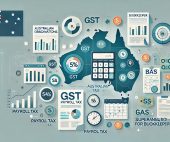
Running a business in Australia means dealing with real financial obligations — BAS lodgements, GST reporting, payroll records, and ATO compliance. Behind all of that sits a set of financial statements that tell you whether your business is actually working.
Bookkeeping clerks are the people who make those statements possible. They record every transaction, reconcile every account, and ensure the numbers that appear on your income statement, balance sheet, and cash flow statement are accurate. Without solid bookkeeping, those reports become unreliable — and unreliable reports lead to poor decisions, compliance issues, and tax headaches.
This guide explains what bookkeeping clerks do, how their work feeds into each financial statement, and what Australian businesses need to know to stay on top of their reporting obligations.
Key Takeaways
- Financial statements provide a clear picture of business performance and financial health.
- Bookkeeping clerks maintain accurate records that support compliant financial reporting.
- Australian businesses must keep records that satisfy ATO requirements and GST obligations.
- Income statements, balance sheets, and cash flow statements each serve a different purpose.
- Modern cloud accounting software improves accuracy, efficiency, and collaboration.
- Regular reconciliations reduce reporting errors and improve business decision-making.
What Does a Bookkeeping Clerk Do?
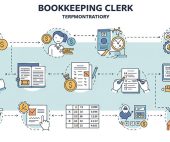
A bookkeeping clerk records, organises, and maintains a business’s financial transactions on a daily basis. Their work is the foundation that accountants and business owners rely on when preparing financial reports, lodging BAS statements, or making strategic decisions.
Day-to-day tasks typically include:
- Recording sales and purchase invoices
- Processing payments to suppliers
- Managing accounts receivable and following up unpaid invoices
- Reconciling bank accounts against the general ledger
- Processing payroll and maintaining payroll records
- Coding transactions to the correct expense or income categories
- Preparing data for BAS lodgement
The distinction between a bookkeeper and an accountant matters in Australia. Bookkeeping clerks handle the ongoing recording of transactions. Accountants interpret those records, prepare tax returns, and provide strategic financial advice. The two roles are complementary — a good bookkeeper makes an accountant’s job significantly easier and more accurate.
Understanding the Three Core Financial Statements
Three financial statements give a complete picture of a business’s financial position. Each one answers a different question, and together they provide the information business owners, lenders, and the ATO need.
| Statement | Primary Question | Reporting Period |
|---|---|---|
| Income Statement | Is the business profitable? | Monthly, quarterly, annually |
| Balance Sheet | What does the business own and owe? | At a point in time |
| Cash Flow Statement | Does the business have enough cash? | Monthly, quarterly, annually |
Most small businesses in Australia prepare these statements at least annually for tax purposes, and monthly or quarterly for internal management. EOFY is the key deadline, but businesses lodging BAS quarterly benefit from reviewing their income statement each quarter as well.
How Bookkeeping Supports the Income Statement
The income statement — also called the profit and loss statement — shows revenue earned and expenses incurred over a specific period. The result is either a net profit or a net loss.
Every line on an income statement originates from a bookkeeping entry. When a café records a daily sales total, that becomes revenue. When a tradie pays for materials, that becomes cost of sales. When a retail store pays rent or electricity, those become operating expenses.
Revenue Recording
Bookkeeping clerks record income when it is earned, not necessarily when cash arrives. A sales invoice raised in June belongs to the June income statement, even if the client pays in July. This is called the accrual basis of accounting, and it’s the standard approach for most Australian businesses with a turnover above the cash accounting threshold.
Expense Categories
Expenses need to be coded to the correct category — cost of sales, wages, rent, utilities, professional fees, and so on. Miscoding expenses distorts gross profit and net profit figures, making the income statement misleading.
Month-End Adjustments
At the end of each reporting period, bookkeeping clerks process adjustments including:
- Depreciation on fixed assets (e.g., vehicles, equipment)
- Accrued expenses not yet invoiced
- Prepaid expenses that relate to future periods
These adjustments ensure the income statement reflects the actual financial performance of the period, not just what was paid or invoiced.
Preparing an Accurate Balance Sheet
The balance sheet shows what a business owns (assets), what it owes (liabilities), and the residual value belonging to the owner (equity) — all at a single point in time. The fundamental equation is:
Assets = Liabilities + Owner’s Equity
Current Assets
Current assets are resources expected to be converted to cash within 12 months. For most small businesses, these include:
- Cash and bank balances
- Accounts receivable (money owed by customers)
- Inventory on hand
- Prepaid expenses
Fixed Assets
Fixed assets are long-term items used in the business — vehicles, equipment, furniture, and property. These appear on the balance sheet at cost, less accumulated depreciation. Bookkeeping clerks maintain an asset register to track each item and its depreciation schedule.
Liabilities
Liabilities represent what the business owes, including:
- Accounts payable (money owed to suppliers)
- GST payable to the ATO
- PAYG withholding obligations
- Business loans and credit facilities
Owner’s Equity
Equity reflects the owner’s interest in the business. It increases with profits and decreases with losses or owner drawings. Retained profits — cumulative profits left in the business — sit in this section of the balance sheet.
Why Cash Flow Statements Matter
A business can be profitable on paper and still run out of cash. That’s why the cash flow statement is often the most practically useful report for day-to-day business management.
The cash flow statement records actual cash movements, separated into three categories:
- Operating activities — cash received from customers, cash paid to suppliers and employees
- Investing activities — cash spent on or received from the purchase or sale of assets
- Financing activities — loan drawdowns, repayments, and owner contributions or drawings
Cash vs. Profit: A Common Point of Confusion
Consider a plumbing business that completes $50,000 worth of work in June but doesn’t receive payment until August. The income statement shows a $50,000 profit in June. The cash flow statement shows $0 cash received in June from that job. Both are correct — but they tell very different stories about the business’s position at 30 June.
Bookkeeping clerks help maintain cash flow visibility by keeping accounts receivable records current, tracking outstanding invoices, and ensuring supplier payments are recorded accurately. Many Australian small businesses use their accounting software’s cash flow report to forecast upcoming obligations against expected receipts.
Australian Compliance Requirements for Financial Statements
Australian businesses face specific bookkeeping and record-keeping obligations under the law. The ATO sets clear requirements, and failure to meet them can result in penalties, difficulties during audits, and ineligible tax deductions.
ATO Record-Keeping Requirements
The ATO requires businesses to keep records that:
- Explain all transactions
- Are in English or convertible to English
- Are kept for at least five years from the date of lodgement of the relevant tax return
Records include tax invoices, bank statements, receipts, payroll records, and contracts.
GST and BAS Obligations
Businesses registered for GST must lodge a Business Activity Statement (BAS) — either monthly or quarterly, depending on their turnover and registration type. The BAS reports:
- Total GST collected on sales
- GST credits claimed on purchases
- PAYG withholding from employee wages
- PAYG instalments for business income
Bookkeeping clerks play a central role in BAS preparation. Accurate GST coding on every transaction is essential. An expense coded without GST when it should include GST results in a missed GST credit — and overclaiming GST credits creates a liability with the ATO.
Single Touch Payroll (STP)
Since 2019, all Australian employers must report wages, tax withheld, and superannuation to the ATO each pay run through Single Touch Payroll. Bookkeeping clerks using STP-enabled software transmit this information automatically at the time of payment. Payroll records must align with STP data reported to the ATO.
EOFY Obligations
End of financial year (30 June) triggers several bookkeeping tasks, including:
- Reconciling payroll to STP reports
- Confirming superannuation contributions are paid and recorded
- Reviewing accounts receivable and payable for accuracy
- Preparing data for the tax return and financial statements
Best Accounting Software for Australian Bookkeeping Clerks
Cloud accounting software has transformed the day-to-day work of bookkeeping clerks in Australia. Automated bank feeds, digital receipt capture, and built-in BAS reporting reduce manual data entry and improve accuracy.
| Software | Best For | Key Features |
|---|---|---|
| Xero | Small to medium businesses | Bank feeds, BAS reporting, payroll, Hubdoc integration |
| MYOB | Small to medium businesses | Long-standing ATO-approved software, payroll, BAS |
| QuickBooks Online | Small businesses | Affordable entry point, reporting, bank feeds |
| Reckon | Sole traders and small businesses | Cost-effective, desktop and cloud options |
Xero is the most widely used cloud accounting platform among Australian bookkeepers and accountants. Its partner ecosystem, bank feed reliability, and direct ATO integration for STP and BAS make it the default choice for many practices.
MYOB has a large installed base across Australia, particularly among businesses that have used it for many years. MYOB Business offers cloud functionality with strong payroll tools.
QuickBooks Online is a competitive option for small businesses looking for lower monthly costs. It handles GST coding, BAS preparation, and basic payroll.
Reckon suits sole traders and micro-businesses with straightforward needs.
Most cloud platforms integrate with third-party tools like Hubdoc for receipt capture and Dext for document management, reducing the time spent on manual data entry.
Common Bookkeeping Mistakes That Affect Financial Statements
Bookkeeping errors don’t stay contained — they flow through into financial statements, BAS reports, and tax returns. Identifying common mistakes helps bookkeeping clerks and business owners build better processes.
Incorrect GST Coding
Every transaction in a GST-registered business needs a GST code. Common errors include:
- Marking a GST-inclusive expense as GST-free
- Claiming GST credits on private expenses
- Failing to apply GST to taxable sales
These errors affect the BAS and can trigger ATO scrutiny if patterns appear across multiple lodgements.
Duplicate Transactions
Bank feeds occasionally import transactions that were already manually entered. Duplicates inflate both income and expense figures, distorting the income statement and balance sheet.
Unreconciled Accounts
Bank reconciliation matches transactions in the accounting software to the bank statement. Skipping reconciliations allows errors to accumulate and makes it difficult to identify missing or incorrect entries.
Missing Invoices and Receipts
Without source documents, expense claims lack substantiation. The ATO requires tax invoices for GST credits over $82.50. Bookkeeping clerks should implement a document capture process — whether through software like Hubdoc or a consistent filing system — to ensure every transaction has supporting documentation.
Payroll Errors
Incorrect pay rates, missing leave accruals, or superannuation miscalculations create compliance risks. These errors can result in underpayment of employees, incorrect STP reporting, or superannuation shortfalls — all of which carry ATO and Fair Work obligations.
Financial Statement Best Practices for Australian Small Businesses
Consistent, accurate bookkeeping doesn’t happen by accident. The businesses that maintain reliable financial statements year-round follow a defined set of practices.
Reconcile Monthly
Reconciling bank accounts, credit cards, and loan accounts every month keeps errors small and manageable. Leaving reconciliations until EOFY creates a large, time-consuming backlog and increases the risk of missing entries.
Use a Chart of Accounts That Suits Your Business
A chart of accounts that reflects your actual business — with clear income categories and expense codes relevant to your industry — makes financial statements more meaningful. A café’s chart of accounts looks different from a construction company’s. Work with your accountant or bookkeeper to set up an appropriate structure from the beginning.
Keep Digital Records
The ATO accepts digital records, and most cloud accounting platforms store documents attached to transactions. Digital record-keeping removes the risk of lost receipts, makes BAS preparation faster, and supports ATO reviews if they occur.
Prepare Financial Statements Quarterly
Many small businesses only look at their financials at EOFY. Reviewing income statements and cash flow reports quarterly gives business owners time to respond to trends — whether that’s rising costs, declining revenue, or a cash flow gap forming ahead of a slow season.
Work with a Registered BAS Agent or Accountant
Bookkeeping clerks maintain the records. Registered BAS agents review and lodge BAS statements. Accountants prepare tax returns and provide financial advice. For complex businesses, having all three roles clearly defined reduces the risk of compliance gaps.
CPA Australia and Chartered Accountants Australia and New Zealand (CA ANZ) both publish guidance for small businesses on financial reporting and compliance. These are useful resources when establishing bookkeeping processes.
Frequently Asked Questions About Bookkeeping Clerk Financial Statements
Can a bookkeeping clerk prepare financial statements?
A bookkeeping clerk prepares and maintains the records that financial statements are built from — income, expenses, assets, liabilities, and cash movements. In many small businesses, bookkeeping clerks produce internal management reports such as profit and loss statements and balance sheets directly from their accounting software. For formal financial statements required for tax returns, loan applications, or statutory purposes, a registered accountant typically reviews and signs off on the reports.
What financial statements does a bookkeeper use most?
The income statement (profit and loss) and bank reconciliation reports are the most frequently used in day-to-day bookkeeping. The balance sheet is reviewed at month-end or quarter-end to confirm that assets, liabilities, and equity are accurately recorded. The cash flow statement is particularly useful for businesses monitoring working capital.
Is bookkeeping different from accounting in Australia?
Yes. Bookkeeping involves recording and organising financial transactions — data entry, reconciliations, payroll, and BAS preparation. Accounting involves analysing that data to produce tax returns, financial statements, and strategic financial advice. In Australia, tax agents and BAS agents must be registered with the Tax Practitioners Board (TPB). Bookkeeping clerks who lodge BAS on behalf of clients must hold a BAS agent registration.
How often should financial statements be prepared?
For compliance purposes, Australian businesses prepare annual financial statements for their tax return. Practically, monthly or quarterly financial statements are far more useful for business management. Businesses lodging BAS quarterly should review their income statement at the same time to track financial performance in line with their reporting cycle.
Which accounting software is most popular in Australia?
Xero holds the largest market share among Australian small businesses and accounting practices, followed by MYOB. QuickBooks Online is growing, particularly among businesses looking for cost-effective solutions. The right platform depends on business size, complexity, payroll needs, and the preference of your bookkeeper or accountant.
What records does the ATO require businesses to keep?
The ATO requires businesses to keep records that explain all income, expenses, and transactions — including tax invoices, bank statements, payroll records, and contracts — for at least five years from the date the relevant tax return is lodged. Records must be in English or readily convertible to English.
Can bookkeeping software generate financial statements automatically?
Yes. Xero, MYOB, QuickBooks, and Reckon all generate income statements, balance sheets, and cash flow statements automatically from recorded transactions. The accuracy of these reports depends entirely on the accuracy of the underlying bookkeeping. Software generates the report — the bookkeeping clerk ensures the data going into it is correct.
Why are bank reconciliations important for financial reporting?
Bank reconciliations confirm that every transaction in the accounting software matches an actual transaction on the bank statement. They catch duplicate entries, missing transactions, and coding errors before they flow into financial statements. A reconciled bank account is also the starting point for an accurate balance sheet — if the cash balance in the software doesn’t match the bank, the balance sheet is wrong.
Final Thoughts
Financial statements are only as reliable as the bookkeeping behind them. For Australian businesses, that means accurate transaction recording, correct GST coding, timely reconciliations, and compliance with ATO obligations throughout the year — not just at EOFY.
Bookkeeping clerks do work that is often invisible when it goes well and very visible when it doesn’t. Investing in good bookkeeping processes, the right software, and clear roles between bookkeepers, BAS agents, and accountants pays off in cleaner reports, fewer compliance issues, and better business decisions.
If your bookkeeping is falling behind or your financial statements don’t reflect reality, that’s worth addressing sooner rather than later. The records you keep today are the financial picture you’ll rely on tomorrow.